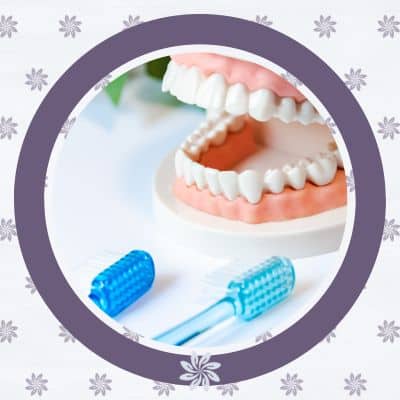
Periodontal disease is caused by bacteria in dental plaque. The bacteria in plaque causes tooth decay, as well as gum disease, if it is not removed regularly. If you have been diagnosed with periodontal disease, here are some tips for maintaining proper dental hygiene and preventing the disease from worsening.
Tooth Brushing
Hold the bristles of your soft toothbrush directed to the point where the tooth meets the gum. Make small side to side motions to disrupt the bacteria. Only cover 2-3 teeth at a time, and then move the brush and work your way around. Be sure to get all surfaces; following a routine helps. For example, start on the upper right molars that are facing the inside of the cheeks, and then after getting to the upper left molars, go to the “inside” and brush where the tooth meets the roof of the mouth. On the lower, be sure to get the inner (or tongue side) of all the lower teeth.
The biting surfaces or “tops” of the teeth also need to be brushed. Tooth brushing should take place twice a day, or as directed by Dr. Pitman and Dr. Ntounis. Electric toothbrushes are safe and can be used by most patients without difficulty. They make your job easier! Ask Dr. Ntounis or Dr. Al Haydar about which type they recommend for you.
Flossing
For teeth that do not have spaces between them, use the “c-shaped flossing” technique. Gently work the floss between the teeth, wrap the floss around one tooth and gently move the floss up and down 5+ times to disrupt the bacteria between the teeth and under the gumline. Do this for every tooth that fits tight next to its neighbor, once a day.
Interproximal Brushes
For teeth that have space between them, custom-sized brushes are more effective than floss and you don’t have to floss these teeth! Many of our patients love TePe. Use the brush by inserting it between the teeth and move it in and out 2-3 times to disrupt the bacteria on both sides of the neighboring teeth, as well as the grooves between the roots of your teeth. These brushes should be used 1-2 times a day, and the brushes may last up to 1 week.
Mouth Rinse
An antibacterial rinse reduces the overall bacterial load in your mouth by reaching your tongue, palate, floor of your mouth and the lining of your cheeks. Listerine (and many store brand rinses) have the ADA seal of acceptance to reduce gingivitis and plaque, and therefore reduce your risk of periodontal disease. Read more about the ADA Seal of Acceptance.
Toothpaste
Patients with exposed roots may experience tooth sensitivity and have a higher risk for root decay. Protecting the exposed roots can decrease sensitivity and reduce the chance of root cavities. For this reason, most periodontal disease patients benefit from using a prescription strength toothpaste (Prevident 5000) in addition to an over-the-counter toothpaste. Ask Dr. Ntounis if you need a prescription toothpaste at your next visit.
Oral Irrigators
Mechanical removal of the bacterial film is best performed using floss or interproximal brushes. For patients who are unable or unwilling to use floss or interproximal brushes, an oral irrigator can help reduce the bacteria by flushing high pressure water between your teeth and gums. Ask us about an oral irrigator at your next visit.
Tongue Cleansers
You may be surprised how many bacteria live on your tongue! Rinsing and brushing your tongue will help, but a tongue cleaner (tongue scraper) will remove it the best. You’d be surprised how much fresher your breath is if you start cleaning your tongue every night!
Request an appointment at Synergy Periodontics & Implants if you have any questions about your periodontal disease or are in need of periodontal services.