
Dental crowns are a common solution for restoring damaged or decayed teeth. They provide a protective cover that not only enhances the appearance of a tooth but also strengthens it. The abutment, a small part that connects the crown to the dental implant, is an essential component of the crown. It holds the crown in place and transfers the bite force to the implant. The design of the abutment can impact the longevity and success of the dental crown. In this blog, we will explore a recent case study in which the proper design and placement of a healing abutment were vital to the overall success of a patient’s dental crown.
Case Study: Abutment Design
This patient presented with a failing central incisor.

An immediate implant was placed with an anatomical healing abutment. Following the placement of the implant, the patient did not report any discomfort or sensitivity. The patient healed uneventfully from the implant placement and integrated without issues for 4 months.

Later, the patient started reporting a “nagging pain on the inside.” She also reported that anesthesia had to be used to seat the crown. After a conversation, the restorative doctor removed the crown and placed a healing abutment. The patient’s symptoms improved.
The Crown
There are a few reasons why the initial crown design may have contributed to the pain and discomfort this patient was feeling:
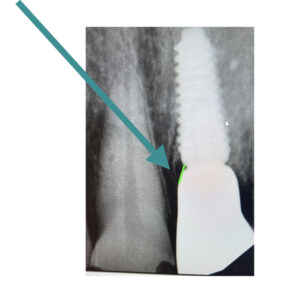
- The existing ceramic margin was below the level of bone.
- The cement used by the lab may have caused tissue irritation.
- The flare may have been too steep and very close to bone, causing pressure and irritation.



Ideal Design
There are ideal parameters that we use in abutment design in order to prevent adverse side effects:
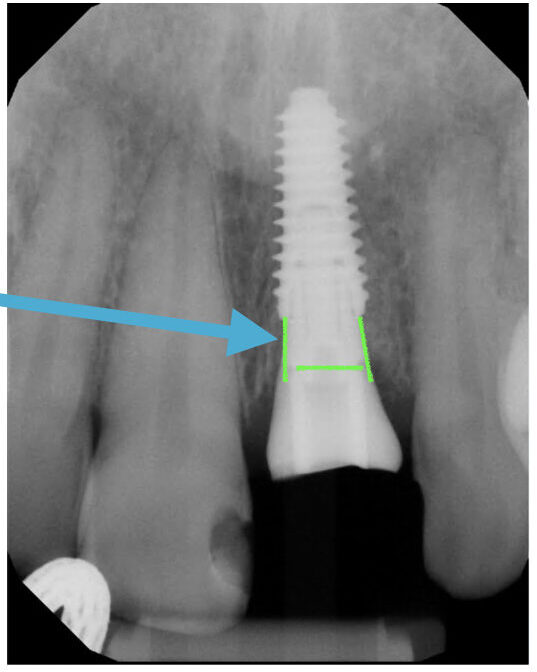
- Abutment with a narrow neck and a higher margin.

- A higher flare to avoid putting pressure on the bone.
- An original abutment with 2 or 3 mm cuff height.
- More gradual flare.
- Polished non-glazed Zirconia on the tissue surface.

Experience From A Similar Case: 2 Years Later
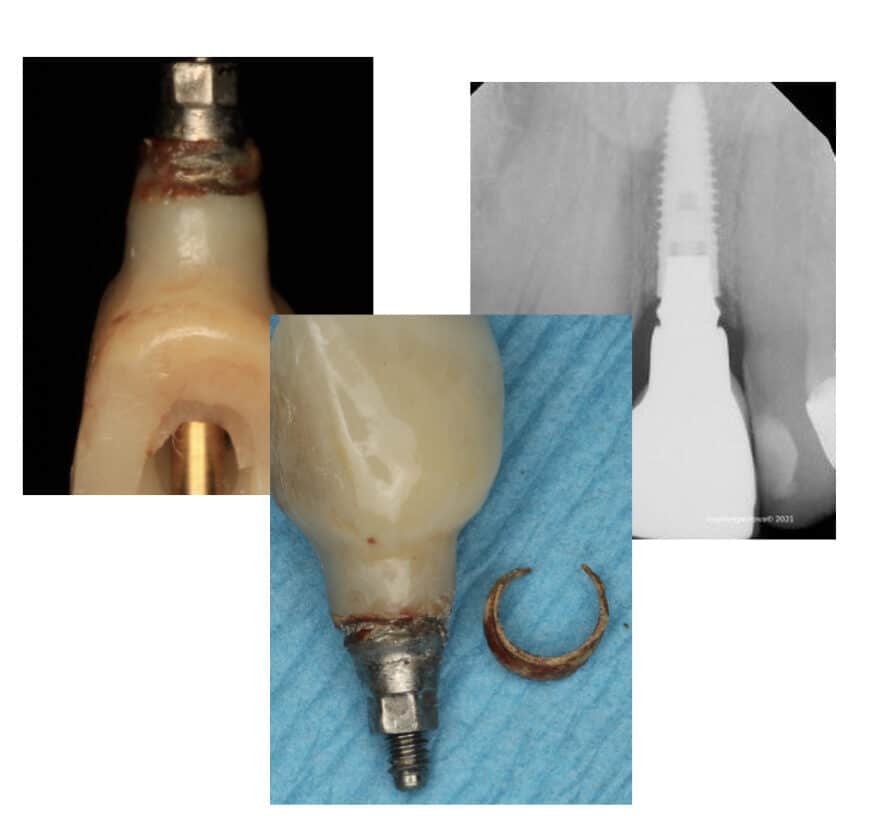
Another example of how abutment design can impact a patient’s healing can be seen in a similar case that we saw two years later. This patient had a screw-retained crown. The subcrestal margin was colonized by bacteria, and the patient suffered bone loss due to the implant.
The ideal abutment and crown design could have potentially prevented the adverse side effects that this patient experienced.
Takeaways
There were a few key takeaways that we noted after treating this patient:
- It is important to educate ourselves and the lab technician.
- The esthetic zone is highly scalloped and the implant will look deep in the PA.
- It helps to stay informed on the latest literature on restorations (e.g. Linkevicious zero bone loss concepts).
- Be super familiar with the implant system.
- Utilize temporaries in the esthetic zone.
Abutment Design: Contact Us Today
Request an appointment today!